Modern Workforce Management Strategies for Today’s Dynamic Business Environment
In the face of rapid technological change and evolving employee expectations, organizations must rethink their talent management approach. Modern workforce management is increasingly driven by digital transformation, data analytics, and an emphasis on employee well-being. By turning to outsourced HR services and guidance, companies can overcome the complexity of managing dispersed teams and dynamic work environments while ensuring compliance and promoting agility.
Forward-looking businesses understand that effective workforce management is not just about scheduling shifts or processing payroll. Instead, it involves adopting strategies that foster employee engagement, improve productivity, and address talent shortages. As we explore the latest trends shaping workforce management, it is clear that organizations that embrace flexibility, technology, and skills-based strategies are better positioned to succeed in today’s marketplace.
Leveraging AI and Automation in Workforce Management
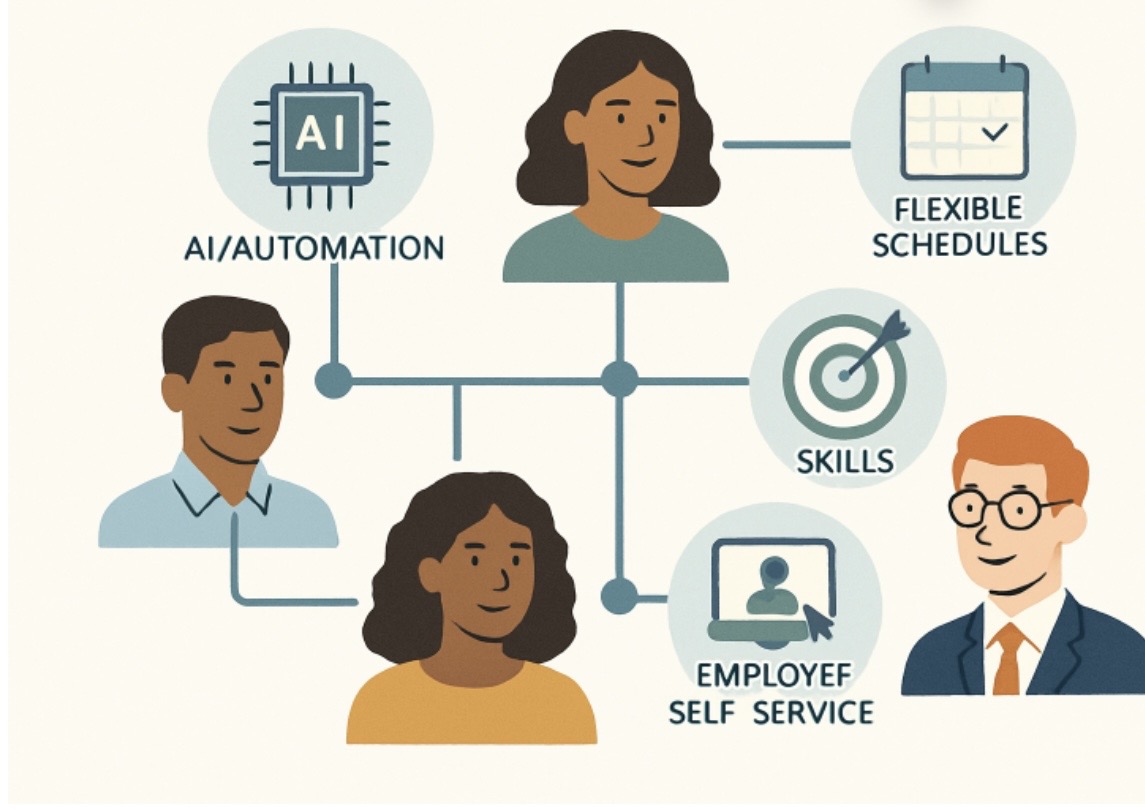
Artificial intelligence and automation are redefining how businesses manage their people. Automated scheduling systems and AI-driven analytics can predict workforce needs in real time, address potential talent shortages, and optimize shift coverage with remarkable accuracy. These technologies also enable faster decision-making, allowing HR leaders to manage staffing and performance with efficient, data-powered precision. Companies adopting AI for workforce management benefit from increased transparency and more consistent labor compliance, which ultimately contributes to stronger business outcomes.
In addition, leveraging AI allows organizations to move beyond reactive management to proactive planning. Predictive tools anticipate surges in demand, absenteeism, and overtime costs before they impact operations. As a result, teams are empowered to adapt schedules promptly, ensuring sufficient coverage and reducing costly last-minute adjustments.
Implementing Flexible Work Arrangements
Flexible work arrangements (FWAs) give employees control over their schedules, locations, and daily routines. Rather than a one-size-fits-all solution, FWAs can include options such as remote work, compressed workweeks, or staggered shifts. This approach directly impacts retention, as professionals increasingly seek employment environments that allow them to balance career and personal obligations. Organizations implementing FWAs experience higher job satisfaction, lower turnover, and improved productivity.
When employers trust staff to set their own boundaries and measure performance by results rather than presence, engagement rates rise. Forward-thinking companies are establishing clear remote work policies, investing in digital collaboration tools, and offering support for hybrid teams to ensure flexibility translates into positive outcomes.
Adopting Skills-Based Talent Strategies
The modern workforce is transitioning from traditional qualifications to a skills-focused model where competencies are prioritized over titles or degrees. A skills-based strategy enables employers to identify, cultivate, and deploy talent based on real capability, which is particularly valuable in fast-changing industries. Organizations that align roles and responsibilities with skills rather than static job descriptions can fill vacancies more efficiently and future-proof their talent pipelines.
With increased focus on upskilling and reskilling, HR can tap into hidden potential within their workforce and encourage internal mobility. This responsiveness not only supports business continuity but also creates a more motivated and resilient team.
Enhancing Employee Experience with Self-Service Platforms
Employee self-service applications empower staff to control their schedules, submit time-off requests, and access payroll data directly from digital dashboards. By reducing reliance on HR for day-to-day transactions, self-service platforms free up administrative bandwidth and allow leaders to focus on strategic initiatives. As noted by SHRM, integrating user-friendly self-service solutions can increase employee engagement and reduce error rates in workforce management processes.
The automation of processes and elimination of back-and-forth communication creates a more transparent workplace culture where employees feel trusted and capable of managing their own needs, ultimately fostering loyalty and accountability.
Utilizing Data-Driven Decision Making
Data-driven insights are invaluable for anticipating labor demands and evaluating workforce performance. Leaders are leveraging analytics to ensure staffing levels align with customer demand, minimize labor costs, and detect trends affecting productivity. Real-time dashboards offer visibility into overtime, absenteeism, and scheduling conflicts, enabling prompt corrective action.
Incorporating predictive modeling and scenario analysis brings greater rigor to workforce planning, facilitating both short-term adjustments and long-term talent strategies. As technology evolves, organizations that invest in robust workforce analytics platforms will be best prepared to respond to rapid market shifts.
Promoting Work-Life Balance
Supporting work-life balance is essential to an engaged, high-performing workforce. Organizations that offer mental health support, flexible hours, and family-friendly benefits are better equipped to attract and retain top talent. Work-life balance now outranks salary as the top consideration for job seekers. Building a culture that respects personal boundaries, supports time-off policies, and fosters genuine work flexibility enhances employee motivation and builds a positive company reputation.
Managing Hybrid and Remote Workforces
The rise of hybrid and remote work models demands new approaches to communication, accountability, and collaboration. Successful organizations set clear expectations, provide robust virtual tools, and conduct regular check-ins, ensuring that all team members stay engaged and informed, regardless of location. Integrating workforce management software with collaboration platforms streamlines time tracking and project management for hybrid teams.
As more companies support distributed teams, maintaining a strong sense of culture and belonging is critical. Virtual team-building activities and transparent communication practices help maintain morale and foster trust among employees working remotely or on-site.
Conclusion
The future of workforce management is defined by adaptability, digital solutions, and a focus on the employee experience. Organizations that embrace AI and automation, champion flexibility, shift toward skills-based strategies, and empower their people through self-service and data insights will succeed in today’s ever-changing business world. By modernizing workforce management strategies, companies position themselves to drive growth, innovation, and long-term employee satisfaction.
