
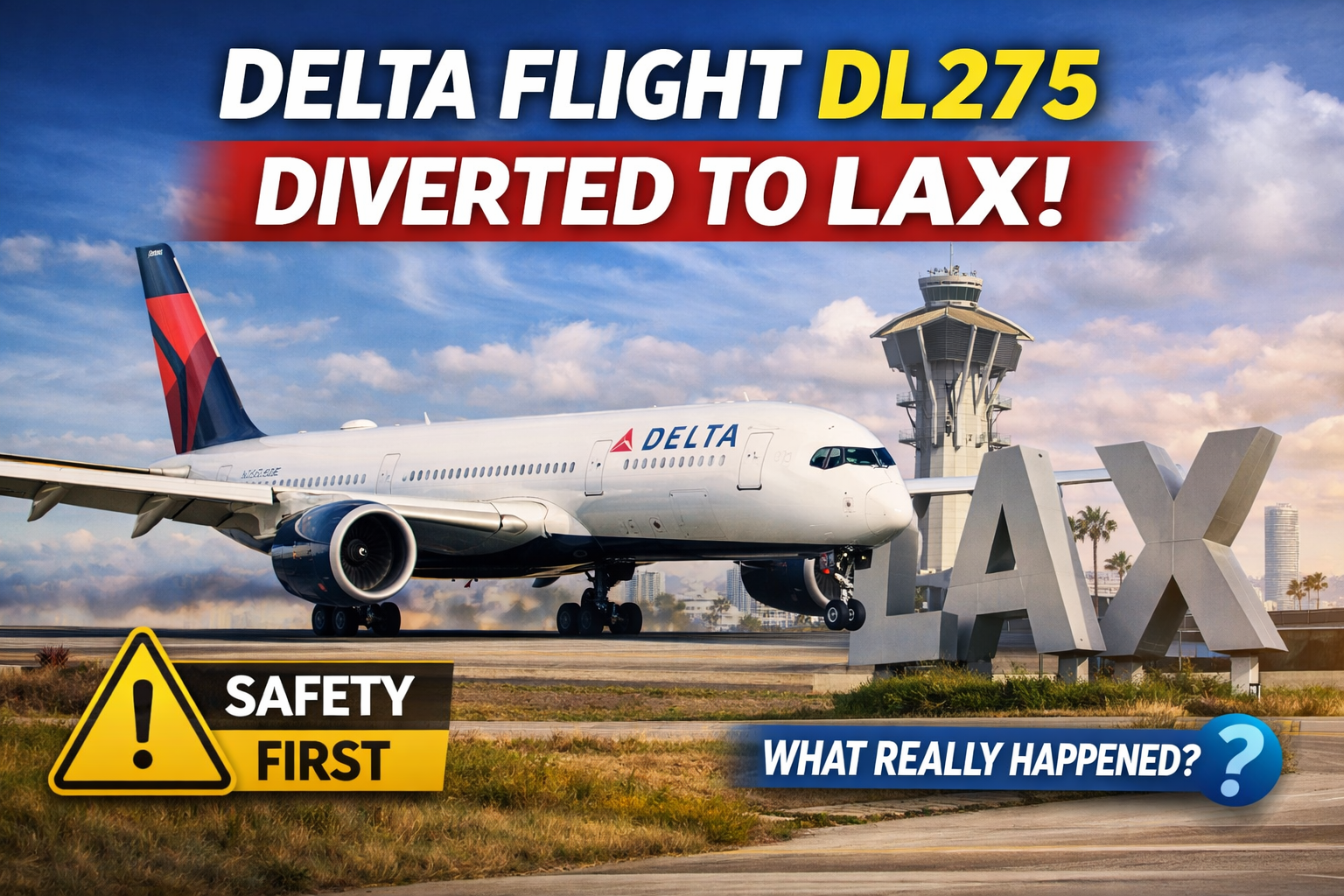
Delta Flight DL275 Diverted to LAX: Full Simple Explanation
delta flight dl275 diverted lax diversions can worry many travelers, most people think a diversion means danger, in real life a diversion is usually a safe choice, airlines use diversions to avoid risk and protect passengers.
This article explains the diversion of delta flight dl275 diverted lax in very simple language. It covers what happened why it happened and what passengers experienced TravelsForNows.com.
Basic Flight Information
Delta Flight DL275 is an international flight operated by Delta Air Lines. The flight travels from the United States to Japan.
Flight details
| Detail | Information |
|---|---|
| Flight number | DL275 |
| Departure airport | Detroit Metropolitan Airport |
| Planned arrival airport | Tokyo Haneda Airport |
| Aircraft type | Airbus A350 |
| Diversion airport | Los Angeles International Airport |
The Airbus A350 is a modern aircraft. It is built for long flights. It has strong safety systems.
What Happened During the Flight
The flight departed normally from Detroit. After several hours in the air the pilots received a system alert.
The alert was linked to an engine anti ice system, The aircraft continued to fly normally. There was no loss of control. There was no danger to passengers. Pilots are trained to act early. On long ocean flights small alerts are taken seriously.
Why the Flight Was Diverted
The pilots decided not to continue across the Pacific Ocean.
Main reason for the diversion
-
A technical alert related to engine anti ice protection
-
Safety rules require inspection on the ground
-
Continuing the flight would reduce safety options
A diversion does not mean an emergency. It means the crew chose the safest path.
Why Los Angeles Was Chosen
Los Angeles was selected for clear reasons.
Reasons for choosing LAX
-
Long runways for large aircraft
-
Skilled maintenance teams
-
Delta staff and equipment available
-
Good weather conditions
-
Support for international passengers
Airport advantages
| Advantage | Reason |
|---|---|
| Long runway | Safe landing for heavy aircraft |
| Maintenance teams | Fast inspection |
| Passenger services | Hotels and food |
| Airline support | Crew and logistics |
Los Angeles is one of the best airports for handling diversions
Landing at Los Angeles
The aircraft landed safely at Los Angeles. Emergency vehicles were present as a routine step. This does not mean there was danger.
After landing steps
-
Aircraft taxied to the gate
-
Passengers exited normally
-
Engineers began inspections
-
Aircraft was removed from service
No injuries were reported
Passenger Experience
Diversions can cause stress. This flight was no different.
Inside the aircraft
-
Pilots explained the situation
-
Crew remained calm
-
Cabin atmosphere stayed controlled
After arrival at LAX
-
Passengers spoke with Delta staff
-
New flights were arranged
-
Hotels were provided when needed
-
Meals were offered based on policy
Common passenger feelings
-
Tired after long travel
-
Frustrated by delay
-
Relieved about safety
-
Thankful for communication
Airline Safety Response
Delta stated that safety was the reason for the diversion, Airlines follow strict rules.
Safety rules followed
-
Inspect aircraft when alerts appear
-
Avoid long ocean routes with known issues
-
Protect passengers and crew
-
Delay schedules if needed
These rules apply to all major airlines.
Understanding Anti Ice Systems
Anti ice systems stop ice from forming on engines
Why these systems matter
-
High altitude air is very cold
-
Ice can block airflow
-
Sensors must stay clear
-
Engine data must stay accurate
Maintenance teams must check even small system alerts on the ground.
How Often Do Flights Divert
Flight diversions are not common. Delta flight dl275 diverted lax are also not rare.
Common causes of diversions
-
Technical alerts
-
Medical emergencies
-
Weather changes
-
Airport closures
Diversion facts
| Fact | Explanation |
|---|---|
| Risk level | Low |
| Pilot control | Full |
| Goal | Safety |
| Result | Safe landing |
The DL275 diversion fits this pattern.
Impact on Airline Operations
Diverting a long flight costs money.
Airline impacts
-
Extra fuel use
-
Maintenance checks
-
Crew schedule changes
-
Passenger support costs
Airlines plan for these events in advance.
What This Event Shows About Aviation
This event shows how aviation safety works.
Key safety lessons
-
Aircraft detect issues early
-
Pilots act before problems grow
-
Airlines choose caution
-
Passenger safety comes first
Diversions are a sign of safety not failure.
Frequently Asked Questions
Was this an emergency landing?
No it was precautionary
Were passengers in danger?
The airline reported no risk to passengers.
Why not continue to Japan?
The aircraft needed inspection
Did passengers reach Tokyo?
The airline arranged later flights for most passengers.
Conclusion
Delta flight DL275 diverted to Los Angeles as a safety precaution. The pilots followed established procedures and made a careful, timely decision. The aircraft landed safely, and passengers were never in danger. This event demonstrates how airline safety systems function and how crews address minor alerts early. Pilots avoid unnecessary risks on long flights, and airlines prioritize caution over maintaining schedules. Although a diversion can be stressful for passengers, airlines make these decisions to protect lives.
In this case the system worked as planned. The main lesson is simple. that when a flight diverts it usually means safety comes first.
