
Assimilation: meaning and use in society language and learning
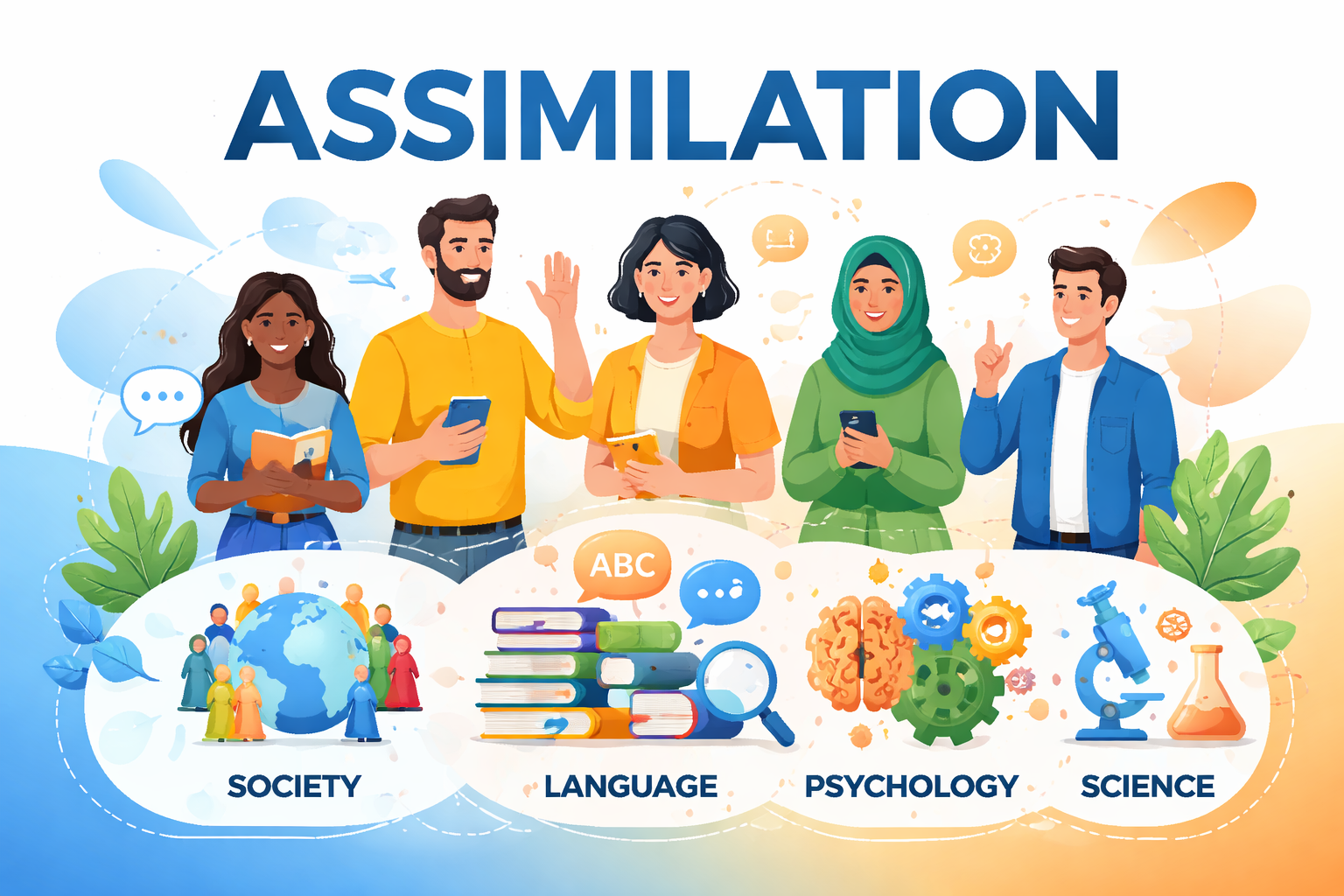
Assimilasjon is a word used in many fields. It is used in social studies and It is used in language and It is used in psychology. It is also used in science. Even if the word is used in many ways it always has one main idea. Assimilation means becoming more like something that already exists HHKTHK.
In daily life the word is often linked to culture and migration. In school it is linked to learning and language and science it is linked to natural processes. This article explains assimilation in a clear and simple way. It shows how the word is used in different fields. It also explains why context is important.
Meaning of assimilation
Basic definition
Assimilation means a process where something changes to fit into something else. The change happens over time. It is not a single action. It is a gradual process.
The core ideas of assimilation are:
-
becoming similar
-
fitting into an existing system
-
changing to match rules or structure
-
reducing differences
These ideas stay the same across all fields.
Word origin
The word assimilation comes from Latin. The original meaning is to make similar. This meaning is still clear today. No matter the field the idea of becoming similar is always present.
Assimilation in society
What assimilation means in society
In social studies assimilation describes how a group adapts to a larger group. This often happens when a minority group lives in a majority society. The minority changes its behavior to match the majority.
This can include changes in:
-
language
-
clothing
-
traditions
-
values
-
daily habits
Over time the original culture may become less visible.
Key features of social assimilation
Social assimilation often shows these features:
-
one main culture sets the rules
-
the minority adapts more than the majority
-
differences become smaller
-
similarity is expected
This means assimilation is not always equal.
Types of assimilation in society
Assimilation can happen in different ways.
Common types include:
-
individual assimilation
-
family based assimilation
-
generational assimilation
-
institutional assimilation
Each type shows how change happens at different levels.
Voluntary assimilation
Voluntary assimilation happens by choice. People decide to adapt on their own.
Common reasons include:
-
better job options
-
easier communication
-
social acceptance
-
personal goals
In this case assimilation can feel helpful and practical.
Forced assimilation
Forced assimilation happens without real choice. People are pushed to change.
This can happen through:
-
laws
-
school systems
-
language rules
-
social pressure
Forced assimilation often causes harm. It can lead to loss of identity and stress.
Power and criticism
Assimilation is often criticized in social studies. The main reason is power.
Common points of criticism are:
-
loss of cultural identity
-
lack of mutual change
-
emotional pressure
-
unfair expectations
Because of this many modern societies prefer integration instead of assimilation.
Assimilation in language
Meaning in linguistics
In linguistics assimilation describes how sounds affect each other. One sound becomes more like another sound. This happens during speech.
It is natural and common. Speakers usually do not notice it.
Features of sound assimilation
Sound assimilation often has these features:
-
happens in fast speech
-
makes speaking easier
-
follows mouth movement
-
can become standard over time
It is a normal part of spoken language.
Types of sound assimilation
There are different ways sounds can change.
Types include:
-
contact assimilation
-
distance assimilation
-
forward influence
-
backward influence
These types describe how and where sounds affect each other.
Examples from English and Norwegian
Examples of sound assimilation include:
-
hand bag pronounced as hambag
-
ten bikes pronounced as tem bikes
-
bank pronounced as bangk
These changes help speech flow smoothly.
Role in language change
Assimilation plays an important role in language growth.
It helps with:
-
natural sound change
-
dialect development
-
easier pronunciation
-
stable speech patterns
Many historical sound changes started as assimilation.
Assimilation in psychology
Basic idea in psychology
In psychology assimilation is part of learning. It is linked to how people understand new information. The idea comes from Jean Piaget. Assimilation means using existing knowledge to understand something new.
Mental schemas
Schemas are mental structures. They help organize knowledge.
Examples of schemas include:
-
animals
-
vehicles
-
people
-
tools
-
places
Schemas help the brain work faster.
How assimilation works in learning
When new information appears the mind tries to fit it into existing schemas.
This process includes:
-
noticing similarities
-
ignoring small differences
-
keeping existing understanding
This makes learning quick and efficient.
Benefits of assimilation
Assimilation supports learning in many ways.
Key benefits include:
-
faster understanding
-
mental stability
-
confidence in knowledge
-
reduced confusion
It helps people feel secure when learning new things.
Limits of assimilation
Assimilation also has limits.
If used too much it can cause:
-
misunderstanding
-
oversimplification
-
resistance to new ideas
Learning works best when assimilation is balanced with change.
Assimilation in science
Biology and physiology
In biology assimilation describes how the body uses nutrients.
This process includes:
-
absorbing food
-
changing nutrients
-
building body tissue
It is essential for life and growth.
Geology
In geology assimilation describes material mixing.
This can include:
-
rock material entering magma
-
chemical changes
-
slow structural change
This process happens over long periods.
Overview of fields using assimilation
| Field | Use of assimilation |
|---|---|
| Society | Cultural adaptation |
| Language | Sound influence |
| Psychology | Learning process |
| Biology | Nutrient use |
| Geology | Material mixing |
This table shows how wide the term is used.
Related concepts
Words linked to assimilation
Several concepts are often mentioned near assimilation.
These include:
-
integration
-
inclusion
-
segregation
-
marginalization
-
accommodation
Each word has a different meaning and use.
Importance of clear meaning
Clear language matters.
Without clarity problems can occur such as:
-
public confusion
-
weak debate
-
poor policy
-
wrong conclusions
Assimilation must always be explained with context.
Assimilation in modern society
It is still discussed today. It appears in many areas.
Common areas include:
-
migration policy
-
education systems
-
language rules
-
national identity
The debate often focuses on balance. Societies ask how much adaptation is needed and who should change.
Frequently Asked Questions
What is assimilation?
Assimilation is a process where a person group or thing becomes more like something else. It happens over time. It means fitting into an existing system.
What does assimilation mean in society?
In society assimilation means that a minority group adapts to the main culture. This can include language values habits and lifestyle.
Is assimilation always forced
No assimilation can be voluntary or forced. Voluntary assimilation happens by choice. Forced assimilation happens through pressure rules or laws.
Why is assimilation controversial?
Assimilation is controversial because it can cause loss of identity. It can also create unfair pressure on minority groups. Power imbalance is a main concern.
What is assimilation in language?
In language assimilation means one sound changes to become more like another sound. This happens in normal speech and helps pronunciation.
What is assimilation in psychology?
In psychology assimilation means using existing knowledge to understand new information. It is part of learning and thinking.
Who introduced assimilasjon in psychology?
Jean Piaget introduced assimilation as part of his learning theory. He explained how the mind organizes new experiences.
Is assimilasjon good or bad?
Assimilation is not good or bad by itself. It depends on context. In learning and language it is natural. In society it can be harmful if forced.
How is assimilasjon different from integration?
Assimilasjon focuses on becoming similar. Integration allows differences while sharing common rules. The goals are not the same.
Why is assimilasjon still important today?
Assimilasjon is important because it affects migration education language and identity. Understanding it helps create fair policies and discussions.
Conclusion
Assimilasjon is a broad and important concept. It describes how something becomes similar to something else. This process appears in many fields such as society language psychology and science. In society assimilation is linked to culture power and identity and In language it is a natural sound process and psychology it supports learning. In science it explains natural change.
Assimilasjon must always be understood in context. It can help learning and communication. It can also cause harm when forced. Clear understanding of assimilasjon leads to better discussion better education and better decisions
