URLWO: Explained in Simple Words
URLs are part of daily internet use. People click links every day. They open pages. They download files and they access information. Even though URLs look small they play a big role. When URLs are messy people feel confused. When URLs are clear people feel safe. URLWO is a way to think about URLs in a better way. It is not one fixed product. It is not one rule. URLWO is an idea and a working method. It helps people create manage and maintain URLs in a clear and controlled way Common Array Manager,
This article explains URLWO in simple words. It focuses on understanding not promotion. It explains how URLWO works and why it matters.
What URLWO Means
It stands for a structured way to work with URLs. It focuses on clarity control and order.
URLWO means:
-
URLs should be easy to read
-
URLs should have a clear purpose
-
URLs should be managed over time
-
URLs should not exist without ownership
it does not focus on search engines. It focuses on people and systems.
Why URLs Need Better Structure
Many URLs today are long. Many include random text and many include numbers and symbols. This happens because systems create them automatically.
These URLs can cause problems.
Problems With Unclear URLs
-
People do not trust the link
-
People do not know where the link goes
-
Links break when systems change
-
Old links stay active with wrong content
-
Teams lose control over shared links
it exists to reduce these problems.
Core Ideas of This
This is based on simple ideas.
Readability
A URL should explain itself. A person should understand the destination before clicking.
Stability
A URL should not break easily. If the destination changes the URL should still work.
Control
URLs should be manageable. Owners should be able to update or disable them.
Order
URLs should follow a system. Random links create confusion.
Responsibility
Every URL should have a reason to exist.
What URLWO Includes
It usually includes several elements. Not all systems include all elements.
Common URLWO Elements
-
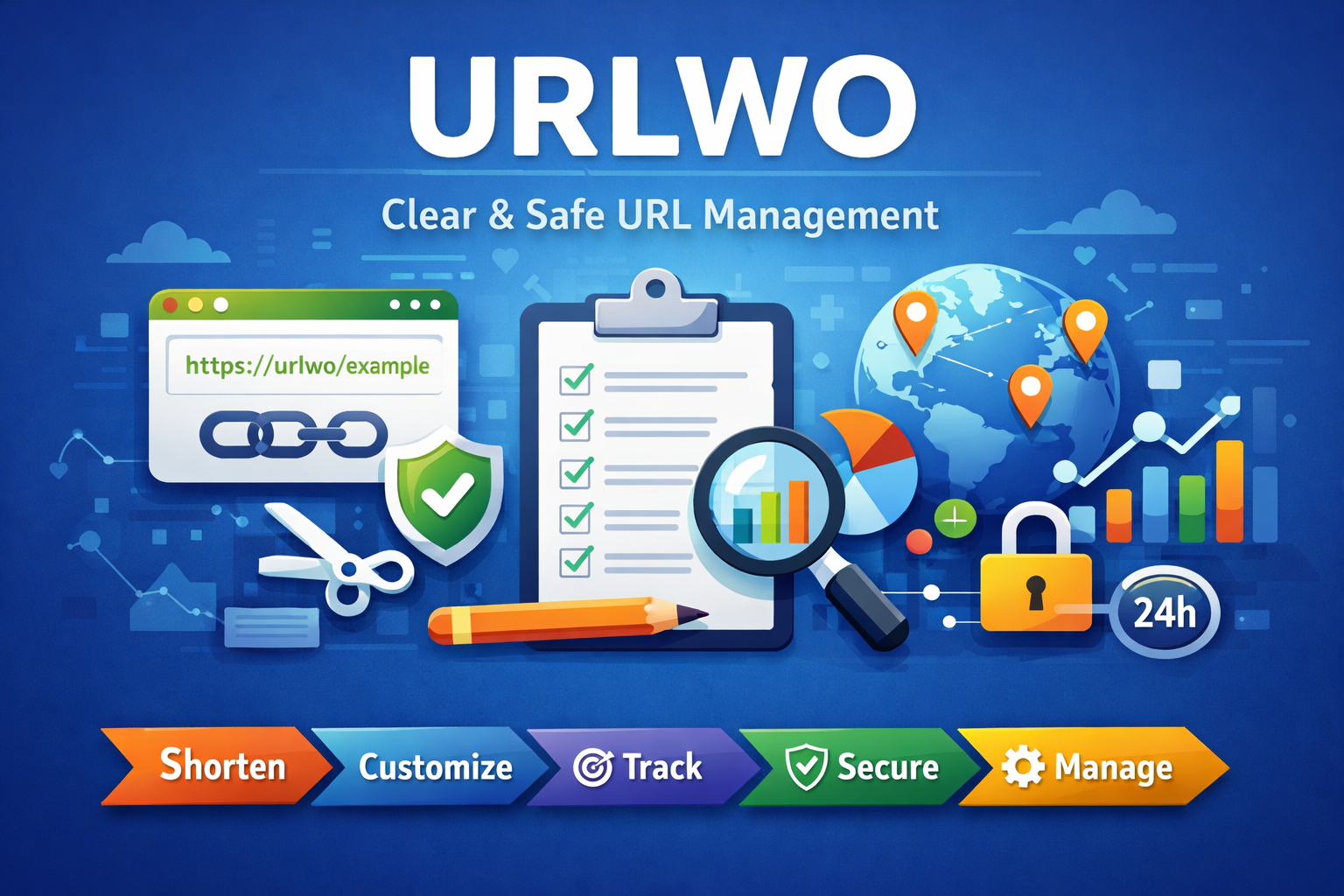
URL shortening
-
Clear naming
-
Redirect handling
-
Link tracking
-
Access control
-
Central link storage
These elements help treat URLs as active resources.
How URLWO Works Step by Step
It follows a simple lifecycle.
URLWO Process
-
A URL is created for a purpose
-
The URL is cleaned and simplified
-
A clear name is added
-
The URL is shared
-
The URL is watched
-
The URL is updated or retired
This process keeps URLs useful over time.
Types of URLs in This
This groups URLs by use.
Informational URLs
These links point to guides help pages or references.
Navigational URLs
These links help users move between sections.
Action URLs
These links lead to forms downloads or actions.
Temporary URLs
These links work for a short time.
Long term URLs
These links are designed to last.
URL Lifecycle Table
| Stage | Meaning |
|---|---|
| Active | Link is used |
| Watched | Link activity is checked |
| Updated | Destination changes |
| Redirected | Link points to new place |
| Archived | Link is no longer shared |
| Retired | Link is closed |
This lifecycle helps avoid broken links.
How URLWO Helps People
It improves how people use links.
User Benefits
-
Users understand links faster
-
Users feel safer clicking links
-
Links are easier to share
-
Links are easier to remember
Team Benefits
-
Teams manage links easily
-
Fewer broken links
-
Clear link ownership
-
Less confusion
URLWO in Organizations
Large teams use many links. Without structure links get lost.
Common Organization Uses
-
Internal documents
-
Training pages
-
Support resources
-
Policy pages
-
Shared tools
it brings order to shared links.
URL Ownership Table
| Role | Task |
|---|---|
| Content owner | Defines link goal |
| Manager | Maintains redirects |
| Admin | Controls access |
| Reviewer | Checks relevance |
Clear roles reduce errors.
Advanced URLWO Features
Some URLWO systems include advanced tools.
Advanced Capabilities
-
Link expiration
-
Access limits
-
Conditional redirects
-
Grouped links
-
Usage reports
-
Recovery options
These features increase safety and control.
Risks Without This
Unmanaged URLs create risks.
Common Risks
-
Broken links
-
Wrong destinations
-
Data exposure
-
Confusing redirects
-
Lost trust
it reduces these risks.
Risk Handling Table
| Risk | Action |
|---|---|
| Broken link | Redirect |
| Old content | Update |
| Wrong access | Restrict |
| Duplicate links | Merge |
Simple actions prevent problems.
When URLWO Is Useful
It works best when:
-
Links are reused
-
Many people share links
-
Links must stay active
-
Access must be controlled
-
Systems change often
It works for small teams and large groups.
Long Term Value of URLWO
URLs connect systems and people. They are not static.
In the future URLs will:
-
Change based on context
-
Follow stronger rules
-
Require better tracking
-
Need higher trust
it prepares systems for this future.
Frequently Asked Questions
What is URLWO?
URLWO is a method to create manage and control URLs in a clear and structured way. It helps keep links readable stable and organized.
Is URLWO a tool or a system?
URLWO is mainly a system or approach. Some platforms may use the name URLWO but the idea itself focuses on how URLs are handled over time.
Why is URLWO important?
URLWO is important because unmanaged URLs can break confuse users and cause loss of trust. URLWO helps prevent these problems.
Does URLWO shorten URLs?
It can include URL shortening but it is not limited to that. It also focuses on naming structure monitoring and control.
Who should use URLWO?
Anyone who shares links can use this. This includes individuals teams organizations and businesses.
Is it only for websites?
No. It can be used for documents files internal systems training pages and shared resources.
Conclusion
URLWO is a simple idea with strong value. It treats URLs as living parts of digital systems. It focuses on clarity control and responsibility. By using this principles people can reduce confusion. Teams can avoid broken links. Systems can stay reliable. URLs may look small but they carry meaning. It helps protect that meaning over time.
