
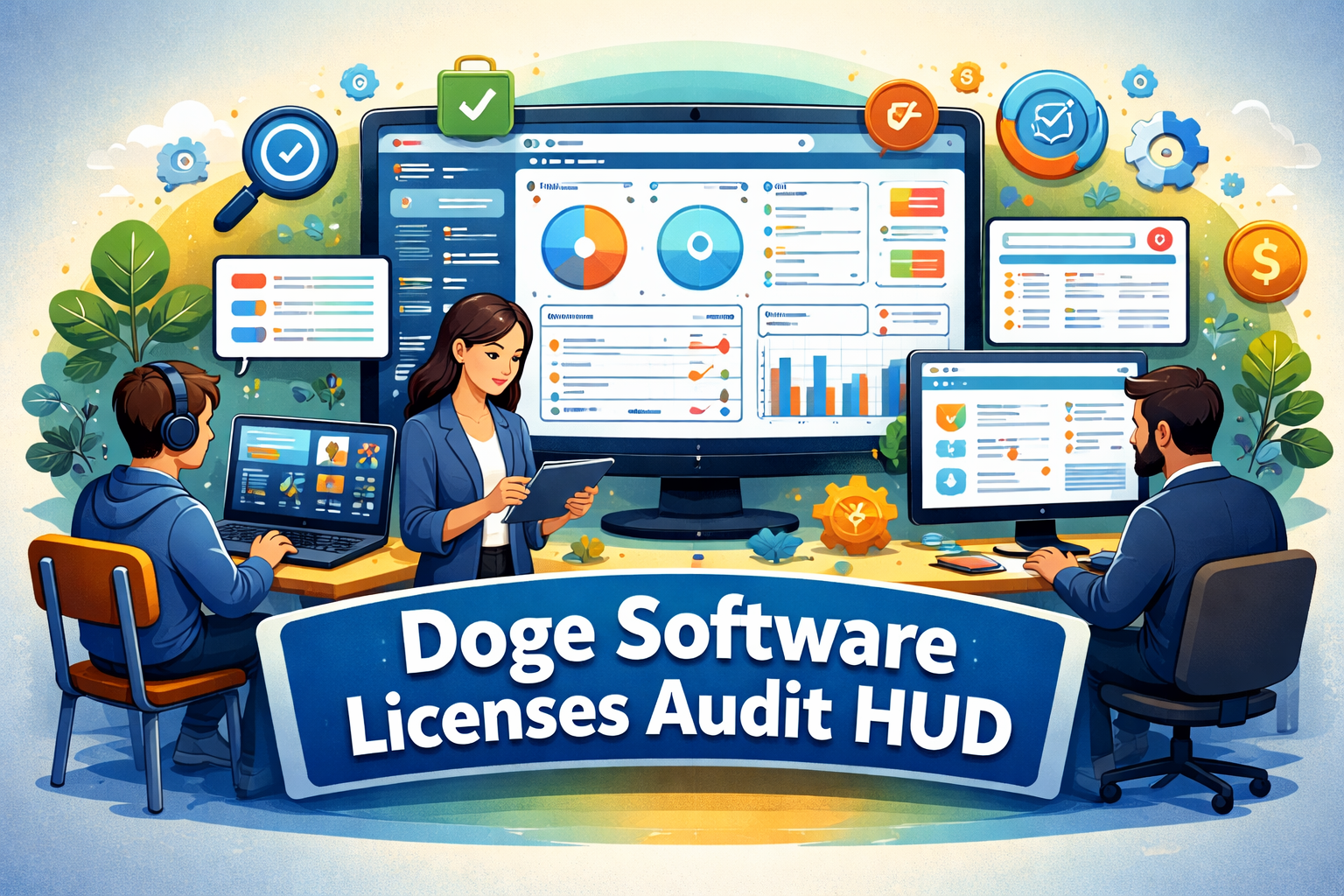
Doge Software Licenses Audit HUD: Meaning, Use, and Key Functions
Doge Software Licenses Audit HUD is a term that appears on many technology and government-focused websites. It is often discussed when people talk about software license audits, cost control, and transparency in large organizations. Most discussions connect this term with government agencies, especially those that use many software tools across different departments Pantagonar
The phrase may sound complex, but the main idea is simple. Doge Software Licenses Audit HUD refers to a system or approach that helps organizations see and understand how software licenses are being used. It does this through a clear visual dashboard, often called a Heads-Up Display, or HUD.
This article explains what Doge Software Licenses Audit HUD means, how it works, why it matters, what features it usually includes, and what lessons organizations can learn from it. The language is kept simple so that both technical and non-technical readers can understand it easily.
What Doge Software Licenses Audit HUD Means
Doge Software Licenses Audit HUD is usually described as a software license auditing system that uses a dashboard to show license data clearly and in real time.
Simple explanation of the term
In simple words, it means:
-
Checking software licenses
-
Tracking how software is used
-
Showing results on a visual dashboard
The purpose is to help organizations know:
-
Which software licenses are active
-
Which licenses are not being used
-
Which licenses may break rules or expire
Meaning of “Audit” in this context
An audit means:
-
Reviewing software usage
-
Comparing usage with license rules
-
Finding problems or waste
The audit is not only about punishment. It is mainly about understanding and improving how software is managed.
Meaning of “HUD” in this context
HUD stands for Heads-Up Display. In this case, it means:
-
A dashboard screen
-
A visual summary of data
-
A real-time overview
The HUD helps people understand license data quickly without reading long reports.
Why Doge Software Licenses Audit HUD Is Important
Software licenses cost a lot of money, especially in large organizations. Without good tracking, many licenses go unused or are mismanaged.
Software use in large organizations
Large organizations often:
-
Use hundreds of software tools
-
Have many users across departments
-
Change staff roles often
This makes license tracking difficult without proper systems.
Common software license problems
Many audits find problems such as:
-
Paying for licenses that no one uses
-
Having more licenses than allowed
-
Forgetting to cancel licenses
-
Using software outside license rules
Doge Software Licenses Audit HUD is designed to reduce these problems.
Financial impact of poor license management
Poor license tracking can lead to:
-
Wasted money
-
Legal risk
-
Failed vendor audits
-
Poor budget planning
A clear audit system helps prevent these issues.
Core Idea Behind the Audit HUD
The main idea behind the audit HUD is visibility.
Why visibility matters
When license data is hidden or spread across systems:
-
Problems stay unnoticed
-
Costs increase quietly
-
Decisions are made without full information
The HUD makes data visible and easy to understand.
Difference between reports and dashboards
Traditional reports:
-
Are long and complex
-
Are reviewed only sometimes
Dashboards:
-
Update in real time
-
Show problems immediately
-
Are easier to understand
This is why the HUD approach is important.
Main Components of Doge Software Licenses Audit HUD
Most descriptions of Doge Software Licenses Audit HUD mention similar components.
Software discovery and inventory
The system scans:
-
Computers
-
Servers
-
Cloud systems
It creates a list of:
-
Installed software
-
Software versions
-
Active users
This list is called a software inventory.
License matching
After inventory, the system:
-
Matches software to licenses
-
Checks license rules
-
Identifies license types
This step is important for compliance.
Usage tracking
Usage tracking shows:
-
How often software is used
-
Who uses it
-
When it was last used
This helps identify unused licenses.
Compliance monitoring
Compliance monitoring checks:
-
License limits
-
Expiration dates
-
Policy rules
Non-compliant usage is highlighted.
Alerts and notifications
The HUD may show alerts for:
-
Expired licenses
-
Unused licenses
-
Over-usage
Alerts help teams act quickly.
Reporting tools
Reports help:
-
Auditors
-
Managers
-
IT teams
Reports may be daily, weekly, or monthly.
How Doge Software Licenses Audit HUD Works Step by Step
The process usually follows a clear flow.
Scan systems
The system scans all connected devices and platforms.
Build software inventory
All detected software is listed in one place.
Identify license rules
Each software item is linked to its license rules.
Compare usage and rules
Usage data is compared with license limits.
Update the dashboard
The HUD shows current status in real time.
Trigger alerts and reports
Warnings and reports are created automatically.
Types of Software Licenses Tracked
Doge Software Licenses Audit HUD usually tracks many license types.
Common license types
-
User-based licenses
-
Device-based licenses
-
Subscription licenses
-
Concurrent licenses
-
Open-source licenses
Why different license types matter
Each license type has different rules:
-
Some limit users
-
Some limit devices
-
Some limit time
The HUD helps manage these differences.
Benefits of Doge Software Licenses Audit HUD
Organizations gain many benefits from this approach.
Cost reduction
Cost savings come from:
-
Cancelling unused licenses
-
Avoiding over-purchasing
-
Improving vendor negotiations
Better compliance
Compliance benefits include:
-
Lower legal risk
-
Easier audits
-
Clear documentation
Better decision-making
Managers can:
-
See real usage data
-
Plan budgets better
-
Make informed choices
Time savings
Teams spend less time:
-
Collecting data
-
Preparing reports
-
Fixing audit issues
Examples of Common Audit Findings
Many audits reveal similar patterns.
Typical findings
Audits often find:
-
Large numbers of unused licenses
-
Duplicate software across teams
-
Old licenses still active
What these findings show
They show:
-
Weak tracking systems
-
Poor communication
-
Need for central control
Public and Expert Opinions
Different people view these audits differently.
Supportive opinions
Supporters believe:
-
Audits expose waste
-
Dashboards improve transparency
-
Real-time data is necessary
Critical opinions
Critics argue:
-
Numbers lack context
-
Some unused licenses are intentional
-
Dashboards can oversimplify reality
Challenges of Using Audit HUD Systems
Even good systems have limits.
Licensing complexity
Software licenses are:
-
Complex
-
Different across vendors
-
Hard to automate fully
Context issues
Unused licenses may be:
-
Reserved for future staff
-
Needed for training
-
Part of bulk contracts
Data must be interpreted carefully.
Data quality problems
Problems may occur if:
-
Devices are not scanned
-
Data is outdated
-
Systems are not connected
Best Practices for Using License Audit HUDs
Organizations can improve results by following good practices.
Centralize license data
Keep all license information in one system.
Review dashboards regularly
Do not wait for annual audits.
Connect HR and IT systems
Automatically manage licenses when staff changes.
Train teams
Help users understand license rules and data.
Broader Lessons for IT Management
The audit HUD approach teaches important lessons.
Continuous monitoring is better
Ongoing checks prevent big problems.
Transparency improves trust
Clear data reduces confusion and conflict.
License management is strategic
Licensing affects:
-
Budgets
-
Security
-
Productivity
Comparison Table: Manual Audits vs HUD-Based Audits
| Aspect | Manual Audits | HUD-Based Audits |
|---|---|---|
| Data updates | Periodic | Real-time |
| Visibility | Low | High |
| Effort required | High | Lower |
| Accuracy | Variable | More consistent |
| Scalability | Limited | Strong |
Future of Software License Auditing
License auditing continues to change.
Smarter dashboards
Future systems may include:
-
Predictive analysis
-
Usage trends
-
Risk scoring
Better system integration
Future tools may connect with:
-
Cloud platforms
-
Procurement systems
-
Development tools
Clearer policies
Organizations may develop:
-
Standard license rules
-
Better documentation
-
Stronger controls
How Organizations Should Use Audit HUD Data
Organizations should:
-
Use data as guidance, not punishment
-
Combine dashboard data with human judgment
-
Focus on long-term improvement
FAQs
What is Doge Software Licenses Audit HUD?
Doge Software Licenses Audit HUD is a system that helps organizations track and review software licenses using a visual dashboard. It shows which licenses are used, unused, or expired.
What does HUD mean in Doge Software Licenses Audit HUD?
HUD means Heads-Up Display. It refers to a dashboard that shows license information clearly and in real time.
Why is Doge Software Licenses Audit HUD important?
It helps reduce wasted spending, improves license compliance, and makes software usage easier to understand for managers and auditors.
Who uses Doge Software Licenses Audit HUD?
IT teams, auditors, and managers in large organizations use it, especially when they manage many software tools and users.
Conclusion
Doge Software Licenses Audit HUD represents a modern way to manage software licenses. By using a clear dashboard, real-time tracking, and automated reporting, organizations can better understand how software is used and where money is wasted, while no system is perfect, the audit HUD approach shows how visibility and data can improve decision-making. As software use continues to grow, tools like this will become more important for controlling costs, improving compliance, and managing complex IT environments.
